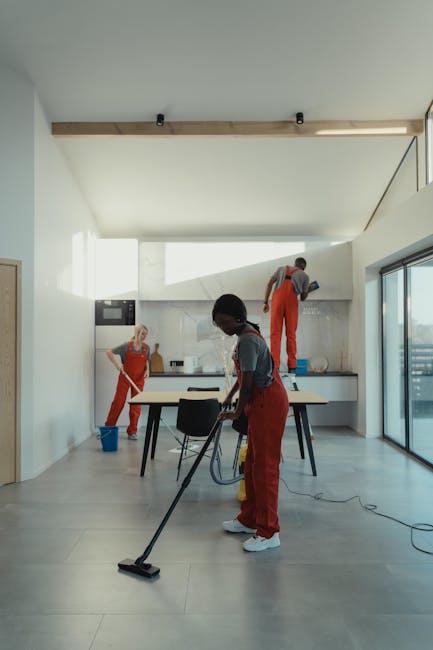
Avoid hidden fees with Enfield cleaners quotes

If you've ever been given a "great" cleaning price only to see the final bill creep up later, you're not alone. The trick to avoid hidden fees with Enfield cleaners quotes is not just finding the cheapest number; it's understanding what that number actually covers. A proper quote should feel clear, calm, and predictable from the start. No surprises, no awkward add-ons, no last-minute sighing at the door.
That matters whether you're booking a one-off spruce-up, regular home help, or a more detailed service like end of tenancy cleaning. In practice, the difference between a smooth job and a frustrating one is often paperwork, clarity, and a few smart questions. Below, you'll find a practical guide to reading quotes properly, spotting sneaky extras, and choosing a cleaning company with confidence in Enfield.
Why Avoid hidden fees with Enfield cleaners quotes Matters
Hidden fees are frustrating because they don't just raise the price; they undermine trust. A quote that looks affordable on the surface can become expensive once parking, access, cleaning products, minimum call-out charges, or "special treatment" fees appear. To be fair, some extras are legitimate. The problem is when they are not explained early, in plain English.
For customers, this is especially important when comparing services like domestic cleaning, one-off cleaning, or end of tenancy cleaning. These jobs can vary a lot depending on property size, condition, and what's included. If you don't pin that down before booking, you may end up paying more than expected for a service that felt straightforward at first glance.
There's also a bigger reason. Clear quotes help you compare providers fairly. One company may appear pricier, but if it includes equipment, detergents, travel, and aftercare, it may actually offer better value than a cheaper quote with add-ons hidden in the small print. That's the kind of detail people often miss when they're juggling work, family, or a moving date. Let's face it, nobody wants a price debate while the mop bucket's already in the hallway.
Expert summary: A trustworthy quote is not the lowest number on the page. It is the quote that tells you what is included, what is excluded, and what could change the final cost before anyone starts cleaning.
How Avoid hidden fees with Enfield cleaners quotes Works
The process is simple in theory, but only if the company is transparent. A well-built quote usually starts with a few basics: the type of property, the rooms or items to be cleaned, the level of dirt or upkeep needed, and any access issues. From there, a cleaner can estimate labour time, materials, and any special equipment needed.
For example, a standard quote for window cleaning may be based on the number of windows and how easy they are to reach. A quote for oven cleaning may depend on the size of the appliance and how much grease has built up. A quote for carpet cleaning often depends on room count, carpet condition, and whether stain removal is needed. Same service category, very different pricing drivers.
That's why good quote checking is less about hunting for a secret discount and more about understanding the logic behind the price. If a provider gives a price before asking anything about your home or job, that may sound convenient. It can also be a warning sign. A properly scoped quote should feel tailored rather than guessed.
Most hidden fees appear in one of three places:
- services not fully listed in the original quote
- extra work added after inspection or arrival
- charges tied to conditions the customer wasn't told about, such as access, parking, or heavy contamination
The fix is not complicated. Ask for a written breakdown, confirm what counts as an extra, and make sure the scope is matched to the actual job. That tiny bit of diligence saves a lot of back-and-forth later.
Key Benefits and Practical Advantages
Getting a transparent quote does more than protect your wallet. It improves the whole experience. Here's what you gain when the pricing is clear from the beginning.
- Better budgeting: you can plan for the full cost instead of guessing.
- Cleaner comparisons: you can compare like for like, not apples with half the orchard missing.
- Less stress: no worrying about surprise charges on the day.
- Faster decisions: if the quote is clear, you can book with confidence.
- Better service matching: the cleaner can assign the right team, time, and equipment.
- Fewer disputes: everyone knows the agreed scope before work starts.
This matters across the board, whether you are booking office cleaning, sofa cleaning, or a bigger job like after builders cleaning. In messy or technical jobs, there are simply more moving parts. Good quoting prevents confusion before it has a chance to grow legs.
A smaller, practical benefit is time. Clear quotes reduce email ping-pong and phone calls. If you already know what's included, you don't need to chase half a dozen clarifications. That's worth something in itself, especially if you're arranging cleaning around a move-in day or a busy working week.
Who This Is For and When It Makes Sense
This approach is for anyone who wants honest pricing, but it is especially useful in a few common situations. If any of these sound familiar, a careful quote check is probably worth your time.
- Tenants moving out: end of tenancy work can get expensive if exclusions are not clear.
- Busy homeowners: regular domestic jobs can grow beyond the original scope if expectations are vague.
- Landlords and letting agents: invoices need to align with agreed standards and timings.
- Office managers: recurring schedules, consumables, and specialist tasks should be separated cleanly.
- People booking a deep clean: this often involves more labour and more variation than a quick tidy-up.
If you're booking a service like deep cleaning, it makes even more sense to ask detailed questions. Deep cleans are inherently broader than routine visits. Skirting boards, hidden corners, limescale, and built-up grease all take time. One customer may need a light refresh; another may need a full reset after months of neglect. That's not the same job, even if the page title sounds similar.
Truth be told, this advice is also useful for people who simply don't enjoy confrontation. Some of us would rather scrub the oven ourselves than argue over a bill. Fair enough. Clear quoting avoids that whole awkward conversation before it starts.
Step-by-Step Guidance
If you want to avoid hidden fees, use a process rather than relying on instinct. Here's a practical way to approach it.
- Describe the job properly. Include room count, approximate size, condition, and any awkward areas. If it is carpet, upholstery, or oven work, say so clearly.
- Ask what is included. Check whether the price covers labour, detergents, equipment, stain treatments, travel, and VAT if relevant.
- Ask what is not included. This is where many hidden costs hide. Don't assume. Ask directly.
- Confirm access details. Stairs, restricted parking, entry codes, lift access, or long carry distances can matter.
- Request the quote in writing. An email or written message gives you something to refer back to later.
- Check the cancellation or rescheduling terms. A fair quote should also explain what happens if plans change.
- Compare two or three quotes. Not ten. You'll just confuse yourself. Two or three good comparisons are usually enough.
- Reconfirm before booking. A quick final check protects both sides.
For specialised tasks such as upholstery cleaning or rug cleaning, it can also help to mention fabric type, visible staining, and whether the item is delicate or antique. That one extra sentence can stop a pricing wobble later.
If the provider offers a dedicated pricing and quotes page, read it carefully. The best ones explain how prices are built, what can affect the final amount, and when an inspection might be needed. That transparency is usually a good sign.
Expert Tips for Better Results
Here are the little things that tend to make the biggest difference. These are the sorts of details people often skip, then regret later.
- Give honest condition details. If the job is heavier than average, say so. A low quote based on inaccurate info is not a bargain.
- Watch for vague phrases. Words like "from", "subject to inspection", or "extras may apply" are not bad on their own, but they need explanation.
- Ask about materials. Some companies bring products and tools, some expect a different arrangement. Don't assume.
- Clarify repeat visits. If a job needs a second visit, ask how that is priced.
- Check whether parking or congestion charges matter. In London, those practical bits can affect the real cost.
One small but useful habit: read a quote out loud to yourself and ask, "Would someone outside this company understand exactly what's happening here?" If the answer is no, keep asking questions. Sounds simple. It is simple. And yet it saves so much faff.
When booking a provider that also offers cleaners for ongoing support or home cleaners for regular visits, ask whether the rate changes for frequency. Sometimes a recurring arrangement is priced differently from a one-off appointment, and that should be clear from the outset.
Common Mistakes to Avoid
Most billing problems are preventable. They usually happen because people are busy, in a rush, or simply too trusting. No judgement there; we've all done it.
- Choosing only by headline price. The cheapest quote is not always the best value.
- Not checking exclusions. If stain removal, appliance interiors, or waste removal are excluded, the final cost can climb quickly.
- Assuming every company defines services the same way. They do not.
- Skipping written confirmation. Verbal promises are easy to misremember.
- Leaving access issues until the day. That can trigger extra time or charges.
- Failing to mention condition honestly. This is the big one.
Another common mistake is not checking the finer points for specialist jobs. For instance, oven cleaner work can involve removable racks, trays, and heavy carbon build-up. Carpet cleaner services can vary depending on whether there are pet stains, high traffic, or damp patches. If those details are missing, the quote may be less accurate than it looks.
And yes, sometimes people are embarrassed about the state of a room. Happens all the time. But honesty saves money. A cleaner can only price what they know.
Tools, Resources and Recommendations
You do not need fancy software to compare cleaning quotes. A simple system is usually enough. In fact, keeping it basic often works better.
- Use a notes app or spreadsheet: list the quote price, what is included, exclusions, timing, and any conditions.
- Take photos of the area: useful when describing the job, especially for larger properties or specialist cleaning.
- Keep the written quote or email chain: easy to refer back to if anything changes.
- Ask for service-specific breakdowns: this is especially helpful for jobs like carpet cleaning or window cleaning.
- Check company policies: insurance, payments, terms, and complaints routes can tell you a lot about how a business operates.
If you want to assess trust as well as price, take a look at pages like about us, insurance and safety, and payment and security. These won't tell you everything, but they can help you understand how seriously the business treats customer confidence, safety, and financial clarity.
It's also worth checking terms and conditions if you are comparing providers. Yes, I know. Nobody loves reading them. But the boring bit is often where the useful bit lives.
Law, Compliance, Standards, or Best Practice
This topic sits squarely in consumer best practice territory. While not every cleaning quote issue is a legal issue, UK businesses are generally expected to present pricing clearly and not mislead customers. A well-run company should be upfront about what the price covers, especially where additional charges might apply.
From a practical standpoint, that means:
- pricing should be presented in a way that a normal customer can understand
- important limitations or exclusions should be explained before booking
- any extra charge should be tied to a real service condition, not sprung on the customer later
- complaints and payment processes should be accessible and easy to follow
For safety-sensitive or more complex work, best practice also matters. If a company offers services such as health and safety policy, it shows they have thought about site risks, safe working methods, and staff protection. That doesn't guarantee flawless pricing, of course, but it does signal a more organised operation.
Likewise, if a provider publishes a clear complaints procedure, it is easier to resolve disputes calmly if something goes wrong. That is exactly the sort of thing you hope never to need, but it is reassuring to know it exists.
For sustainability-minded customers, a page such as recycling and sustainability can also be useful. It may not affect the quote directly, yet it tells you something about the company's working standards and disposal habits, which can matter on larger jobs.
Options, Methods, or Comparison Table
When you're comparing cleaning quotes, you're usually choosing between a few broad methods. Each has its place.
| Quote style | What it usually means | Risk of hidden fees | Best for |
|---|---|---|---|
| Fixed quote | A set price based on agreed scope | Lower, if the scope is accurate | Clear jobs with known details |
| From price | Starting point only; final cost may rise | Medium to high | Jobs where condition can vary a lot |
| Hourly rate | You pay for time spent on site | Depends on efficiency and job complexity | Flexible tasks, recurring support, varied work |
| Inspection-based quote | Priced after seeing the property or item | Usually lower if done properly | Complex jobs, large homes, specialist cleaning |
In everyday terms, fixed quotes feel safest when the job is well defined. Hourly pricing can be fine too, but only if you are comfortable with some variability. Inspection-based pricing often works best for tricky or high-value work, because it gives the provider a proper look before they price it.
The real goal is not to pick the "best" method in a vacuum. It is to choose the one that matches the job and keeps surprise costs to a minimum. Simple enough, really.
Case Study or Real-World Example
Here's a realistic example. A tenant in Enfield needs an end-of-tenancy clean for a two-bedroom flat. The first quote looks attractive because it is lower than the others. But when they look closer, it only includes basic surfaces and floors. Oven cleaning, inside cupboards, bathroom limescale, and balcony glass are all listed as extras.
That would be fine if it were clearly explained from the start. The issue is that the customer assumed "end of tenancy" meant the full flat reset, which is a very common assumption. After a short call and a written breakdown, the revised quote is slightly higher but fully inclusive. The customer chooses that one, and the move-out day becomes much less stressful. No awkward negotiation at the end, no scrambling for extra cash. Just a clean handover.
Another common scenario involves carpet and upholstery. A homeowner asks for carpets cleaner support for a lounge and stairs, but one room has heavier staining from a pet accident. If that detail is not shared, the original quote may not reflect the extra treatment needed. Once the issue is disclosed, the cleaner can give a more realistic price. Slightly higher, yes. But accurate.
This is the point people sometimes miss: a good quote is not always the cheapest quote, but it is often the one that feels least exhausting later on. And that matters more than it sounds like it should.
Practical Checklist
Use this checklist before you accept any quote. It takes a few minutes and can save a lot of hassle.
- Have I described the job clearly and honestly?
- Do I know exactly what is included?
- Have I asked what costs extra?
- Is the price written down and easy to refer to?
- Have I checked access, parking, or entry details?
- Do I understand how the company handles rescheduling or cancellation?
- Have I compared the quote with at least one other provider?
- Does the company seem transparent on pricing and quotes?
- Am I comfortable with the business's policies and contact routes?
- If something changes, do I know who to speak to?
Quick rule of thumb: if a quote feels unclear, it probably is. Ask again. Better a slightly longer conversation now than a nasty surprise later.
Get a free quote today and see how much you can save.
Conclusion
Learning how to avoid hidden fees with Enfield cleaners quotes is really about control. You're not trying to micromanage the cleaner or turn every booking into a legal review. You're simply making sure the job, the scope, and the price all match up before the first cloth is picked up.
That one habit can save money, yes, but it also reduces stress. It creates a better relationship with the company you hire. And honestly, that's the thing most people want: a clean result, a fair bill, and no drama. Good pricing should feel boring in the best possible way.
If you remember nothing else, remember this: ask what is included, ask what is extra, and ask for it in writing. Simple. Sensible. Worth doing every time.
And if you do find a quote that is clear, fair, and easy to understand, hold onto it. That kind of service is refreshingly rare, and a bit of clarity goes a long way.
Frequently Asked Questions
What should an Enfield cleaners quote include?
A good quote should explain the service scope, what is included, any likely extras, the timing, and any conditions that could affect the final price. If the quote is vague, ask for a breakdown.
How do I spot hidden cleaning fees before booking?
Look for unclear wording, "from" pricing without detail, and missing exclusions. Then ask directly about parking, travel, supplies, stain treatment, appliance interiors, and access issues.
Is a fixed quote better than an hourly rate?
Not always. Fixed quotes are great for defined jobs, while hourly rates can work for flexible or recurring tasks. The best option depends on the type of cleaning and how predictable the work is.
Why do cleaning quotes sometimes change on the day?
Usually because the actual job differs from the description given at booking. That can happen if the property is larger, dirtier, or harder to access than expected. Clear information upfront helps prevent this.
Should I tell the cleaner about stains or heavy dirt?
Yes, absolutely. Honest details help the cleaner price the job properly. If you leave out damage or heavy build-up, the quote may be inaccurate and extra charges may follow.
Do special services like oven or carpet cleaning cost extra?
They often do, because they require different tools, products, and time. It's best to ask whether specialist items are included or priced separately.
Can I compare Enfield cleaning quotes fairly?
Yes, but only if each quote covers the same scope. Compare what is included, what is excluded, and whether materials, travel, and add-ons are part of the price.
What if a quote looks cheap but feels unclear?
Trust that feeling. A cheap price with unclear wording can become expensive after extras are added. Ask for clarification before you book.
Do I need a written quote?
Written quotes are strongly recommended. They give both sides a record of what was agreed, which helps avoid confusion later.
How far in advance should I ask for a quote?
As early as possible, especially for move-outs, post-build cleans, or larger properties. Early quoting gives you time to compare properly and avoid rushed decisions.
What should I do if the final invoice is higher than agreed?
Check the written quote, compare it with the invoice, and ask the company to explain the difference. If the extra charge was not discussed, raise it calmly through the company's complaints process.
Are cleaning companies required to be transparent about charges?
As a matter of good practice, yes. Customers should be able to understand what they are paying for, and any limitations or extras should be explained clearly before work begins.